
Diseases & Treatments, Emergency & First Aid, Health & General Care
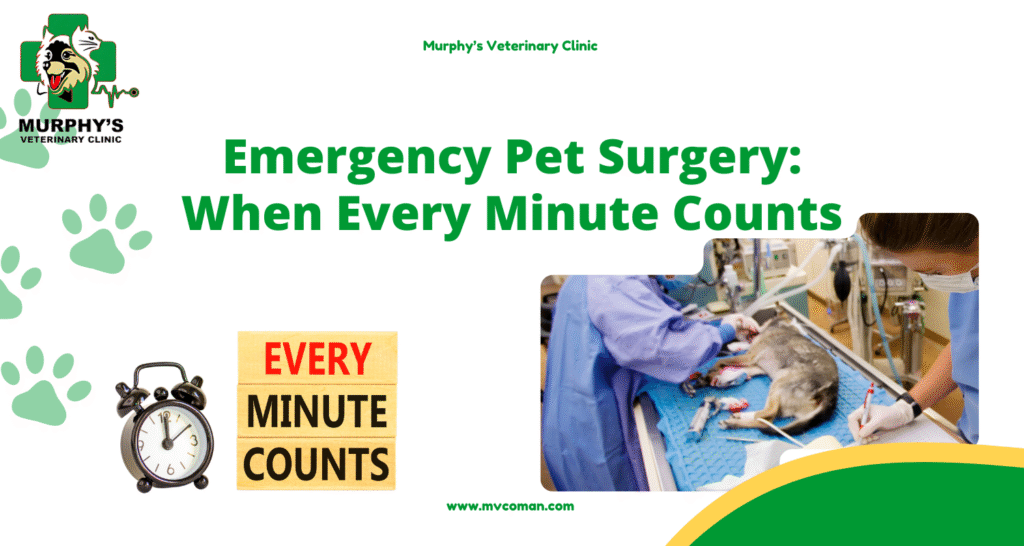
Emergency Pet Surgery: When Every Minute Counts
Jan
Topics covered in this article:
- Situations Requiring Immediate Clinical Intervention
- Common Procedures and Expected Outcomes
- Critical Warning Signs Pet Owners Must Recognize
- Diagnostic Modalities in Critical Care
- Postoperative Care and Recovery Management
- Conclusion
Emergency Pet Surgery: When Every Minute Counts is one of the most critical fields in veterinary medicine, where rapid clinical decision-making directly influences survival outcomes. These procedures are performed in life-threatening situations that demand immediate intervention to stabilize the patient and prevent irreversible organ damage.
In many instances, animals requiring emergency surgical care present with severe trauma, acute abdominal emergencies, or internal bleeding that cannot be resolved through medical treatment alone. Even brief delays in intervention may substantially increase the risk of complications and mortality.
Recognizing the situations in which urgent surgical intervention is necessary enables pet owners to respond quickly and seek timely veterinary care. This article reviews the most common emergency surgical conditions, key warning signs, essential diagnostic methods, and postoperative considerations related to emergency surgical management in companion animals.
Situations Requiring Immediate Clinical Intervention
In veterinary emergency medicine, certain clinical presentations mandate Emergency Pet Surgery as the only viable life-saving option. These cases often involve compromised circulation, severe pain, or rapid deterioration of vital functions. Immediate surgical exploration is frequently required to control hemorrhage, relieve pressure, or restore normal anatomy.
Veterinarians rely on physical examination findings, vital parameter instability, and advanced imaging to determine the urgency of Emergency Pet Surgery. Failure to intervene promptly can lead to septic shock, tissue necrosis, or multi-organ failure, significantly reducing survival chances.
- Severe Abdominal Trauma
- Internal Hemorrhage
- Gastrointestinal Obstruction
- Visceral Organ Rupture
Common Procedures and Expected Outcomes
Several standardized procedures are routinely performed during Emergency Pet Surgery, depending on the underlying pathology and patient stability. Emergency laparotomy, splenectomy, and gastric decompression are among the most frequently indicated interventions. The primary goal is rapid stabilization while minimizing surgical time and physiological stress.
Postoperative prognosis following Emergency Pet Surgery is influenced by the severity of injury, duration of clinical signs, and the patient’s response to intensive care. Close postoperative monitoring is essential to detect complications early and optimize recovery.
| Emergency Procedure | Common Indication | Surgical Objective |
| Exploratory Laparotomy | Intestinal obstruction | Restore intestinal patency |
| Splenectomy | Splenic rupture | Control internal bleeding |
| Gastric Surgery | Gastric dilatation-volvulus | Re-establish blood flow |
Critical Warning Signs Pet Owners Must Recognize
Early recognition of warning signs that may necessitate Emergency Pet Surgery is crucial for pet owners. These signs often develop abruptly and progress rapidly, leaving a narrow window for effective intervention. Behavioral changes are frequently the earliest indicators of severe internal pathology.
Prompt veterinary evaluation upon noticing these signs significantly improves surgical outcomes and reduces postoperative complications associated with Emergency Pet Surgery.
- Acute Severe Pain
- Persistent Vomiting
- Abdominal Distension
- Sudden Collapse or Weakness
Diagnostic Modalities in Critical Care
Accurate diagnosis is a cornerstone of successful Emergency Pet Surgery, as inappropriate or delayed surgical decisions can worsen patient outcomes. Veterinarians utilize a combination of imaging techniques and laboratory diagnostics to rapidly assess internal injuries and physiological status.
These diagnostic tools allow clinicians to localize pathology, estimate severity, and formulate an effective surgical plan tailored to each Surgery case.
| Diagnostic Tool | Primary Purpose | Clinical Advantage |
| Radiography | Detect obstructions | Rapid assessment |
| Ultrasonography | Identify free fluid | Non-invasive |
| Blood Analysis | Evaluate shock | High diagnostic value |
Postoperative Care and Recovery Management
Successful recovery following Emergency Pet Surgery depends heavily on comprehensive postoperative care. Pain control, fluid management, infection prevention, and restricted activity are essential components of recovery protocols.
Pet owners play a vital role by closely monitoring surgical sites and adhering to veterinary instructions to prevent secondary complications after Surgery.
- Effective Pain Management
- Surgical Wound Monitoring
- Intravenous Fluid Support
- Strict Activity Restriction
Conclusion
Emergency Pet Surgery represents a critical, time-sensitive intervention that often determines survival in veterinary emergencies. Rapid recognition of clinical signs, immediate access to emergency veterinary services, and accurate surgical decision-making are fundamental to successful outcomes.
Educating pet owners about emergency indicators ensures timely presentation and preserves the critical treatment window. When combined with advanced diagnostics and meticulous postoperative care, Emergency Pet Surgery offers the best chance for recovery in life-threatening situations.
Murphy’s Veterinary Clinic provides advanced emergency and surgical care supported by experienced veterinary surgeons and state-of-the-art diagnostic equipment. Through rapid assessment, precise surgical intervention, and comprehensive postoperative management, the clinic plays a vital role in improving outcomes for patients requiring Emergency Pet Surgery.
