
Diseases & Treatments, Health & General Care, Veterinary Science & Advances
Reproductive Disorders in Pets An Overview
Feb
Topics covered in this article:
- Pregnancy Diagnosis and Monitoring
- Reproductive Disorders in Pets: Pyometra
- Tumors of the Reproductive Organs
- Reproductive Disorders in Pets: Infertility and Breeding Soundness
- Congenital and Prostate Disorders
- Conclusion
Reproductive Disorders in Pets An Overview highlights their significant role in clinical veterinary medicine, as these conditions directly affect fertility, systemic health, and overall quality of life in companion animals. Such disorders may involve male or female reproductive systems and can present as acute, chronic, or subclinical conditions. They extend beyond infertility to include infectious, inflammatory, hormonal, and neoplastic diseases that may progress silently in early stages. In many cases, delayed diagnosis increases the risk of severe or life-threatening complications. Accurate assessment relies on a solid understanding of reproductive physiology and pathology, supported by diagnostic imaging, hormonal evaluation, and laboratory testing. Reproductive Disorders in Pets are most commonly observed in dogs and cats, where inadequate management can lead to reproductive failure or systemic illness. Preventive strategies, combined with client education and a structured veterinary approach, play a critical role in improving long-term clinical outcomes.
Pregnancy Diagnosis and Monitoring
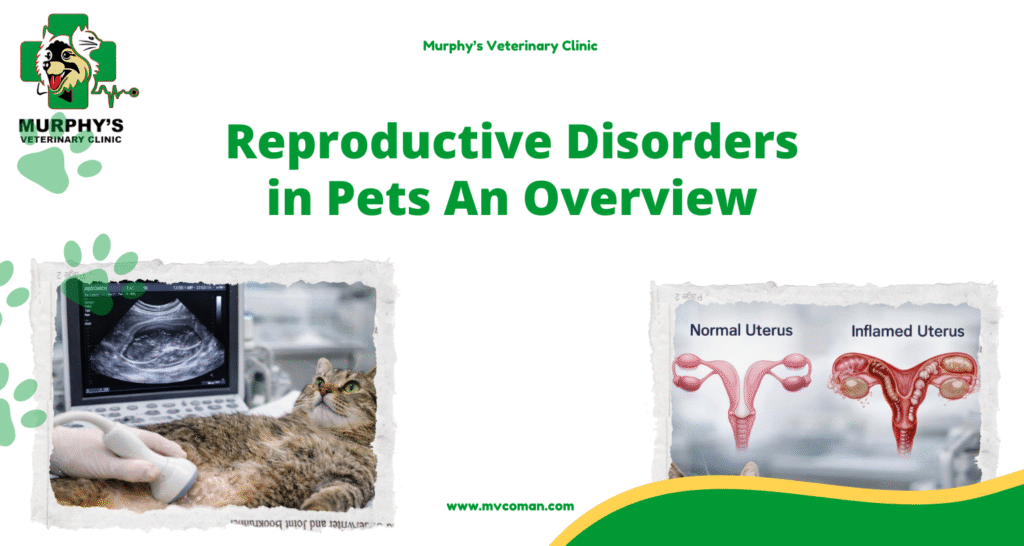
Pregnancy diagnosis and monitoring constitute a fundamental aspect of reproductive health management in female animals. Reproductive Disorders in Pets during gestation may lead to fetal loss, embryonic resorption, dystocia, or neonatal mortality. Ultrasonography is the primary diagnostic modality for confirming pregnancy and assessing fetal viability. Radiography is used later in gestation to determine fetal number and skeletal development. Reproductive Disorders in Pets affecting pregnancy often remain clinically silent until advanced stages. Hormonal evaluation, particularly progesterone measurement, supports gestational assessment. Continuous monitoring allows early detection of developmental abnormalities. Nutritional management and stress reduction are integral to successful pregnancy outcomes. Comprehensive monitoring significantly increases the likelihood of normal parturition and healthy offspring.
- Ultrasonography
- Hormonal Evaluation
- Fetal Viability Assessment
- Gestational Monitoring
Reproductive Disorders in Pets: Pyometra
Pyometra is one of the most severe and potentially fatal uterine diseases affecting intact female animals. Reproductive Disorders in Pets such as pyometra are typically associated with progesterone-mediated changes following estrus. Accumulation of purulent material within the uterus can result in endotoxemia and septic shock. Clinical signs vary depending on cervical patency and disease progression. Reproductive Disorders in Pets involving pyometra require immediate veterinary intervention. Diagnostic confirmation is achieved through ultrasonography and hematological analysis. Ovariohysterectomy remains the treatment of choice in most cases. Delayed treatment markedly increases mortality risk. Postoperative monitoring is essential to ensure systemic recovery.
| Type | Cervical Status | Clinical Presentation | Treatment |
| Open | Open | Vaginal discharge | Surgery and antibiotics |
| Closed | Closed | Lethargy, fever | Emergency surgery |
Tumors of the Reproductive Organs
Neoplastic conditions of the reproductive tract include tumors affecting the uterus, ovaries, prostate gland, and testicles, which may be benign or malignant with variable prognoses. Reproductive Disorders in Pets of neoplastic origin require early detection to ensure effective disease management. Diagnostic evaluation commonly involves imaging techniques, cytology, and histopathological examination, as these conditions are often associated with endocrine disturbances. Clinical manifestations may include infertility, hormonal imbalance, or signs of systemic illness. Surgical excision is frequently the primary treatment approach, while therapeutic planning depends on tumor type, anatomical location, and metastatic potential.
- Uterine Tumors
- Ovarian Tumors
- Prostatic Tumors
- Testicular Tumors
Reproductive Disorders in Pets: Infertility and Breeding Soundness
Infertility represents a major concern in breeding animals and structured reproduction programs, as it can negatively affect conception, gestation, and overall reproductive success. Reproductive Disorders in Pets associated with infertility may arise from genetic, infectious, or hormonal factors. Breeding soundness evaluation requires a comprehensive assessment of reproductive anatomy and endocrine function. In male animals, semen quality and testicular integrity are essential indicators, while in females, estrous cycle regularity and uterine health must be carefully examined. Early diagnostic investigation significantly enhances the likelihood of successful reproduction, and in selected cases, appropriate medical or management interventions may help restore fertility.
| Factor | Male | Female | Diagnostic Method |
| Hormonal | Low testosterone | Cycle disorders | Blood analysis |
| Structural | Duct obstruction | Uterine abnormalities | Imaging |
Congenital and Prostate Disorders
Congenital abnormalities and prostate diseases are clinically significant conditions in male dogs and may be present at birth or develop with aging. Reproductive Disorders in Pets affecting the prostate commonly include benign prostatic hyperplasia, which is the most frequent prostatic condition in intact males. Clinical signs often involve urinary or defecatory difficulties and may be associated with underlying hormonal imbalances. Ultrasonography is considered the diagnostic modality of choice for prostate evaluation. Management strategies vary based on disease severity and clinical impact, ranging from medical therapy to surgical intervention.
- Congenital Abnormalities
- Benign Prostatic Hyperplasia
- Prostatitis
- Prostatic Cysts
Conclusion
Reproductive health conditions represent a broad group of clinically significant disorders that require timely diagnosis and appropriate management to prevent long-term complications. Reproductive Disorders in Pets can adversely affect reproductive performance as well as overall systemic health, making a multidisciplinary diagnostic approach essential for accurate identification. Early intervention and preventive strategies substantially improve outcomes, while owner awareness plays a key role in early disease recognition. Elective sterilization may lower the incidence of several reproductive conditions, and ongoing veterinary monitoring supports improved long-term prognosis. Effective management ultimately enhances animal welfare and reproductive success.
Murphy’s Veterinary Clinic provides comprehensive diagnostic and therapeutic services for Reproductive Disorders in Pets, utilizing advanced imaging technologies and laboratory diagnostics. The clinic offers specialized care for pregnancy monitoring, pyometra management, infertility evaluation, reproductive tumors, and prostate diseases. With an experienced veterinary team and evidence-based clinical protocols, Murphy’s Veterinary Clinic supports optimal reproductive health and long-term well-being in companion animals.
