
Diseases & Treatments, Special Care, Veterinary Science & Advances
Airway Surgery (Specialty Surgeries: Airway & More)
Feb
Topics covered in this article:
- What Is Brachycephalic Surgery? Helping Pets Breathe Better
- Stenotic Nares and Elongated Soft Palate Surgery
- Tracheal Collapse in Small Dogs
- Quality of Life and Postoperative Care After Airway Surgery
- Post-Operative Care After Upper Airway Surgery in Dogs
- Conclusion
Airway Surgery refers to a group of specialized surgical procedures designed to improve airflow and respiratory function in companion animals affected by upper airway obstruction. In brachycephalic breeds, abnormal craniofacial anatomy significantly increases airway resistance and compromises normal breathing. This surgical approach plays a critical role in reducing respiratory distress and improving oxygenation. Conditions such as stenotic nares, elongated soft palate, and tracheal collapse are among the most common indications for intervention. It is recommended when medical management alone fails to adequately control clinical signs. Early diagnosis and timely treatment help prevent secondary cardiopulmonary complications. Advances in surgical techniques and anesthetic protocols have significantly improved procedural safety in recent years. Comprehensive preoperative evaluation, including physical examination and diagnostic imaging, is essential for optimal outcomes. This intervention improves clinical symptoms and supports long-term physiological stability. Postoperative management and owner compliance strongly influence overall prognosis. This article explores the major clinical aspects of Airway Surgery in small animal practice.
What Is Brachycephalic Surgery? Helping Pets Breathe Better
Airway Surgery in brachycephalic animals corrects congenital abnormalities of the upper respiratory tract. The shortened skull conformation in these breeds reduces airway diameter and increases inspiratory resistance. Airway Surgery decreases the work of breathing and restores more efficient airflow. Common signs include stertor, cyanosis, syncope, and reduced heat tolerance. Early surgical intervention improves long-term outcomes. Airway Surgery may involve multiple corrective procedures performed during a single anesthetic event. Performing surgery at a younger age may prevent irreversible airway damage. Most patients experience significant clinical improvement. Airway Surgery remains the cornerstone of treatment for brachycephalic airway syndrome.
- Brachycephalic Airway Syndrome
- Upper Airway Obstruction
- Respiratory Distress Signs
- Surgical Indications
Stenotic Nares and Elongated Soft Palate Surgery
Airway Surgery in these cases targets correction of narrowed nostrils and excessive soft palate length, both contributing to upper airway obstruction. Stenotic nares restrict inspiratory airflow, while an elongated soft palate may obstruct the rima glottidis. Airway Surgery addressing these lesions often results in rapid clinical improvement. Simultaneous correction is commonly recommended. Recovery time is generally short with appropriate postoperative care. Airway Surgery is associated with a low complication rate when properly performed.
| Feature | Stenotic Nares | Elongated Soft Palate |
| Obstruction Site | Rostral airway | Caudal airway |
| Primary Sign | Inspiratory stertor | Gagging and coughing |
| Surgical Technique | Rhinoplasty | Staphylectomy |
| Postoperative Improvement | Rapid | Gradual |
Tracheal Collapse in Small Dogs
Airway Surgery is considered for tracheal collapse when medical therapy fails to adequately control clinical signs. Degeneration and weakening of the tracheal cartilage rings lead to dynamic airway collapse, commonly presenting as a characteristic “goose-honk” cough that worsens with excitement or exercise. In advanced or refractory cases, surgical intervention aims to restore and maintain tracheal patency through stabilization techniques such as extraluminal support rings or intraluminal stent placement. Thorough diagnostic evaluation and careful case selection are essential to achieve optimal outcomes and minimize complications. Long-term monitoring remains important, particularly in patients receiving stents, to assess function and detect potential issues early. In appropriately selected patients, this approach can significantly improve respiratory comfort and overall quality of life.
- Tracheal Cartilage Weakness
- Chronic Cough
- Diagnostic Imaging
- Surgical Stabilization
Quality of Life and Postoperative Care After Airway Surgery
Airway Surgery significantly improves quality of life in brachycephalic breeds by reducing respiratory effort and improving exercise tolerance. By restoring more efficient airflow, it helps decrease chronic physiological stress associated with hypoxia and supports better cardiovascular stability. Over time, patients often demonstrate improved stamina, better sleep quality, and reduced episodes of respiratory distress. This surgical intervention also lowers the risk of severe respiratory complications and enhances overall physical comfort and daily activity levels. Successful outcomes depend on proper postoperative monitoring, effective edema control, appropriate pain management, and strict activity restriction during the healing phase. When aftercare is carefully followed and regular recheck evaluations are performed, results remain stable and long-term clinical improvement is consistently achieved.
| Parameter | Pre-Surgery | Post-Surgery |
| Exercise Tolerance | Low | Improved |
| Respiratory Distress | Severe | Mild |
| Sleep Quality | Disturbed | Normal |
| Medication Dependence | High | Reduced |
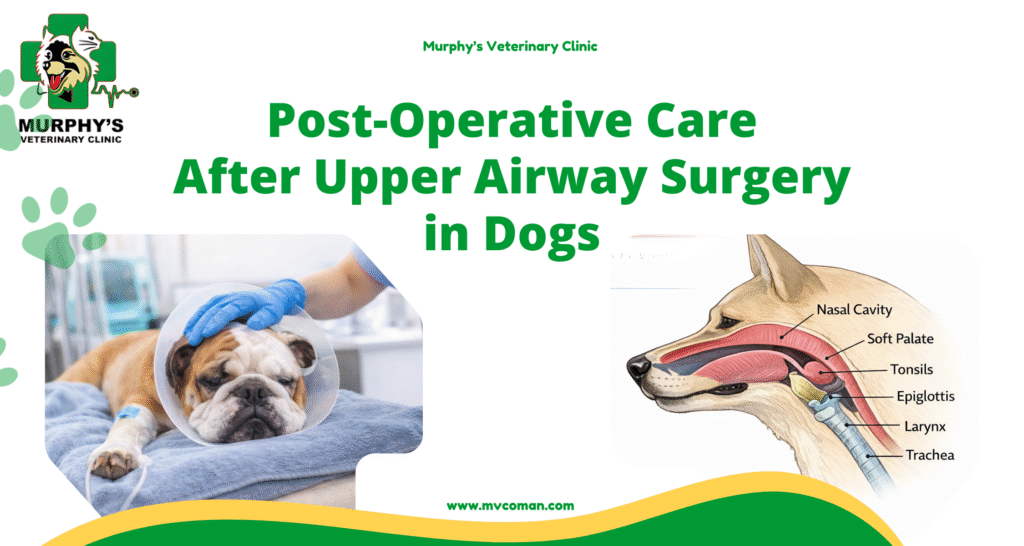
Post-Operative Care After Upper Airway Surgery in Dogs
Postoperative outcomes depend heavily on appropriate aftercare. Monitoring for airway edema during the immediate recovery period is critical, and respiratory rate and oxygen saturation should be closely observed. Effective pain and stress control enhances recovery, while strict activity restriction is required during healing. Soft food diets help minimize mechanical irritation, and anti-inflammatory medications are administered as prescribed. Early detection of recurrent obstruction is essential. Short-term hospitalization may be necessary in some cases. Owners should be educated to recognize warning signs and attend scheduled recheck examinations to evaluate healing progress. Strict adherence to postoperative instructions significantly reduces complications. When aftercare is properly managed, results remain stable and gradual improvement is typically observed over several weeks. Owner cooperation is a key factor in long-term success, and Airway Surgery extends beyond the operating room.
- Postoperative Monitoring
- Edema Control
- Pain Management
- Activity Restriction
Conclusion
Airway Surgery represents an important specialty intervention in modern veterinary medicine. It plays a vital role in managing upper airway obstruction and preventing progression of respiratory disease. Airway Surgery markedly enhances patient quality of life when timely performed. Postoperative care and owner education remain essential for long-term success.
Murphy’s Veterinary Clinic offers comprehensive Airway Surgery services supported by advanced diagnostic tools, experienced surgical teams, and modern anesthetic protocols, providing individualized evaluation and thorough postoperative care to improve respiratory function in affected pets.
