
Emergency & First Aid, Health & General Care
Pet Heatstroke First Aid and Prevention Guide
Dec
Topics covered in this article:
- Clinical Signs and Risk Factors
- Veterinary Diagnostic Evaluation
- Treatment and Emergency Management
- Prevention Strategies for Heatstroke
- Common Errors in Managing Heatstroke
- Conclusion
Pet Heatstroke First Aid and Prevention Guide highlights the urgent nature of heatstroke in pets and the critical need for rapid and accurate medical response. Heatstroke is a veterinary emergency that occurs when the body’s temperature regulation fails, leading to dangerous hyperthermia and cellular damage. As internal temperature rises beyond safe limits, protein denaturation, circulatory collapse, and neurological dysfunction may follow. This condition often develops in hot climates, enclosed vehicles, or during strenuous activity in high humidity. Certain pets—including brachycephalic breeds, overweight animals, seniors, and those with cardiopulmonary disease—have a significantly higher risk. Early recognition and appropriate Pet Heatstroke First Aid are essential to prevent irreversible organ injury. The aim of this guide is to present accurate veterinary information, explain the clinical presentation of heatstroke, and provide evidence-based strategies for immediate care and long-term prevention. Owners who understand the fundamentals of Pet Heatstroke First Aid can play a vital role in improving survival outcomes and minimizing complications.
Clinical Signs and Risk Factors
Recognizing clinical signs early is a major component of effective Pet Heatstroke First Aid. When core temperature rises above normal physiological limits, the circulatory, renal, and central nervous systems begin to deteriorate. Pets may exhibit rapid panting, tachycardia, hypersalivation, vomiting, confusion, or collapse. Brachycephalic breeds experience impaired ventilation and can develop severe heatstroke even in moderate temperatures. Stressful activity, restricted airflow, obesity, and lack of hydration amplify risk. Heatstroke may progress so rapidly that the time window for intervention is drastically limited. Initial steps of Pet Heatstroke First Aid include immediate relocation to a shaded and ventilated area, providing fresh water if the pet is conscious, and contacting a veterinary clinic. Without swift action, tissue hypoxia and coagulopathies may develop.
- Elevated internal temperature
- Panting, lethargy, or weakness
- Vomiting, confusion, or collapse
- Cardiac irregularities and shock
Veterinary Diagnostic Evaluation
Veterinary assessment focuses on determining systemic damage and guiding appropriate therapy. Evaluation typically includes measurement of rectal temperature, electrolyte status, renal markers, mentation levels, and perfusion parameters. Many cases require hospitalization depending on severity. Controlled cooling techniques form a crucial component of Pet Heatstroke First Aid performed by professionals. Monitoring hemodynamic stability is essential to prevent arrhythmias and renal failure. Blood pressure assessment and fluid therapy help maintain adequate perfusion and oxygen delivery. Laboratory screening allows early detection of metabolic acidosis, electrolyte imbalance, and coagulopathy.
| Diagnostic Parameter | Clinical Importance | Treatment Objective |
| Core body temperature | Defines severity | Controlled reduction |
| Respiratory status | Identifies shock | Stabilization |
| Electrolyte levels | Prevents arrhythmias | Sodium–Potassium correction |
| Renal markers | Detects kidney damage | Early management |
Treatment and Emergency Management
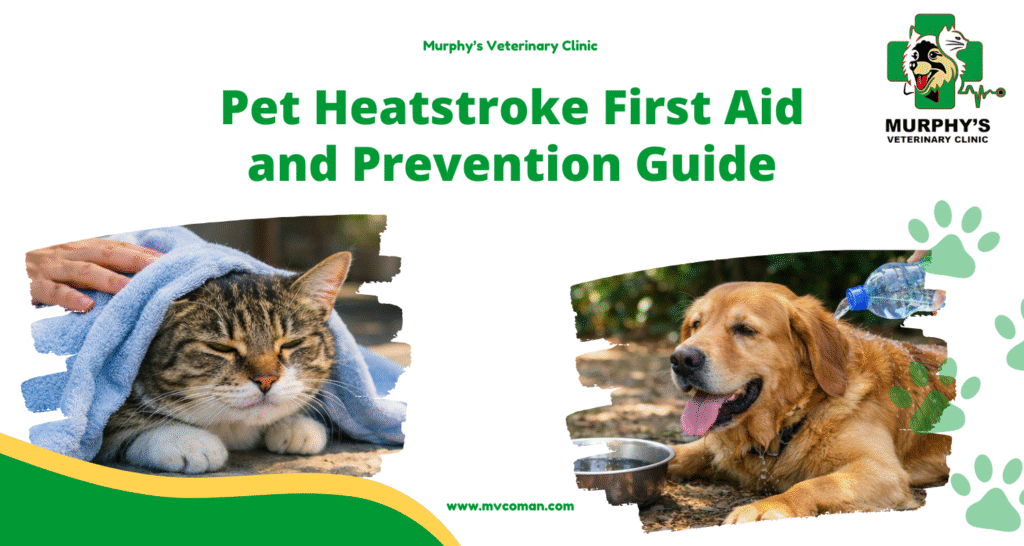
Immediate and controlled cooling is one of the most important elements of Pet Heatstroke First Aid. The pet should be placed in a ventilated area, and evaporative cooling may be initiated using lukewarm—not ice-cold—water to avoid peripheral vasoconstriction. Immersion in cold water is contraindicated because it may worsen circulatory collapse. Veterinarians frequently administer intravenous fluids to restore perfusion, maintain renal function, and correct metabolic disturbances. Continuous monitoring of cardiovascular and neurological status is vital. Coagulation abnormalities may develop in severe heatstroke; therefore, periodic blood screening is necessary. Pets with heart conditions require individualized care protocols, and aggressive activity should be restricted during recovery.
- Controlled cooling
- Electrolyte correction
- Cardiovascular monitoring
- Neurological monitoring
Prevention Strategies for Heatstroke
Preventive strategies form the foundation of effective Pet Heatstroke First Aid. Pets must never be left in parked vehicles; even a few minutes can cause lethal hyperthermia due to rapid interior heat rise. Outdoor activity should be limited to cooler parts of the day, and continuous access to clean water and shaded areas must be ensured. Humidity significantly increases heat stress because it impairs evaporative cooling. Brachycephalic breeds and elderly or medically compromised pets require stricter preventive measures. Adequate ventilation, temperature control, and avoidance of stressors are key components.
| Preventive Measure | Health Goal | Expected Outcome |
| Hydration & airflow | Natural cooling | Body temperature control |
| Avoiding vehicles | Eliminates greenhouse effect | Prevents acute heatstroke |
| Outdoor activity timing | Minimizes thermal load | Increased safety |
| Shade & ventilation | Reduces heat stress | Thermal stability |
Common Errors in Managing Heatstroke
Certain mistakes worsen the pet’s condition and are contrary to proper Pet Heatstroke First Aid. Frequent errors include using ice-cold water, which restricts blood flow and delays core cooling. Owners may also assume improvement after superficial cooling, while internal organ damage continues silently. Administering over-the-counter medications without veterinary advice poses serious risks. Returning the pet to activity prematurely increases the likelihood of recurrence or complications. Continuous observation and veterinary reassessment are recommended due to the risk of delayed renal failure, clotting disorders, or neurological symptoms.
- Use of extremely cold water
- Discontinuing monitoring after mild improvement
- Self-medication without veterinary supervision
- Early return to physical activity
Conclusion
Heatstroke is a life-threatening condition that requires rapid recognition and evidence-based care. Prompt application of Pet Heatstroke First Aid enables better prognosis, reduced cellular injury, and improved organ recovery. Preventive strategies are the most effective way to protect vulnerable pets, including adequate hydration, limiting exposure to heat, and avoiding enclosed spaces. Veterinary evaluation ensures correction of metabolic imbalances and detection of complications such as renal failure or coagulation abnormalities. Owners who understand and apply the principles of Pet Heatstroke First Aid play a crucial role in safeguarding their pets’ lives.
Murphy’s Veterinary Clinic provides comprehensive emergency support for heatstroke cases. The clinic offers precise temperature monitoring, intravenous fluid therapy, laboratory diagnostics, and cardiovascular stabilization. With its experienced staff and advanced medical equipment, the clinic ensures accurate assessment and post-treatment care. Murphy’s Veterinary Clinic also provides tailored guidance on preventing heatstroke based on climate, breed sensitivity, and the pet’s medical history.
