
Diseases & Treatments, Emergency & First Aid, Health & General Care
Skull Trauma and Fractures in pets
Nov
Topics covered in this article:
- Clinical Signs of Skull Trauma in Pets
- Diagnostic Methods and Imaging
- Emergency Treatment and Care
- Types of Skull Fractures and Their Consequences
- Long-term Care and Prevention
- Conclusion
Skull Trauma and Fractures is one of the most critical emergencies in veterinary medicine, which, if not diagnosed and treated promptly, can lead to permanent neurological damage. When discussing Skull Trauma in Pets, we refer to injuries affecting the bony structures of the skull or the brain tissue. These injuries typically occur due to accidents, falls from heights, blunt force trauma, or attacks from other animals. Recognizing Skull Trauma in Pets is crucial because the skull not only serves as a protective barrier but also plays a vital role in safeguarding the brain and central nervous system. In many cases, clinical signs of skull trauma may not appear immediately, complicating timely diagnosis. Careful observation of clinical symptoms, neurological assessment, and advanced imaging techniques are essential for early detection of Skull Trauma in Pets. Proper treatment can prevent severe complications, such as intracranial hemorrhage or increased intracranial pressure. This article aims to provide a practical, scientific, and SEO-friendly guide about Skull Trauma in Pets for pet owners and veterinary students.
Clinical Signs of Skull Trauma in Pets
Skull Trauma in Pets can present with a spectrum of signs ranging from subtle to severe neurological deficits, depending on the location and severity of the injury. Mild cases may show only lethargy or localized pain, while severe cases can cause acute neurological symptoms and behavioral changes. Skull Trauma in Pets often involves epistaxis, difficulty opening the mouth, or visible cranial deformities. Increased intracranial pressure may lead to seizures or coma. In some cases, symptoms are delayed and only appear hours after the trauma, which makes immediate veterinary evaluation essential. Timely recognition of Skull Trauma in Pets improves prognosis and reduces the risk of permanent brain damage.
– Loss of consciousness
– Nose or ear bleeding
– Swelling around the skull
– Seizures or tremors
Diagnostic Methods and Imaging
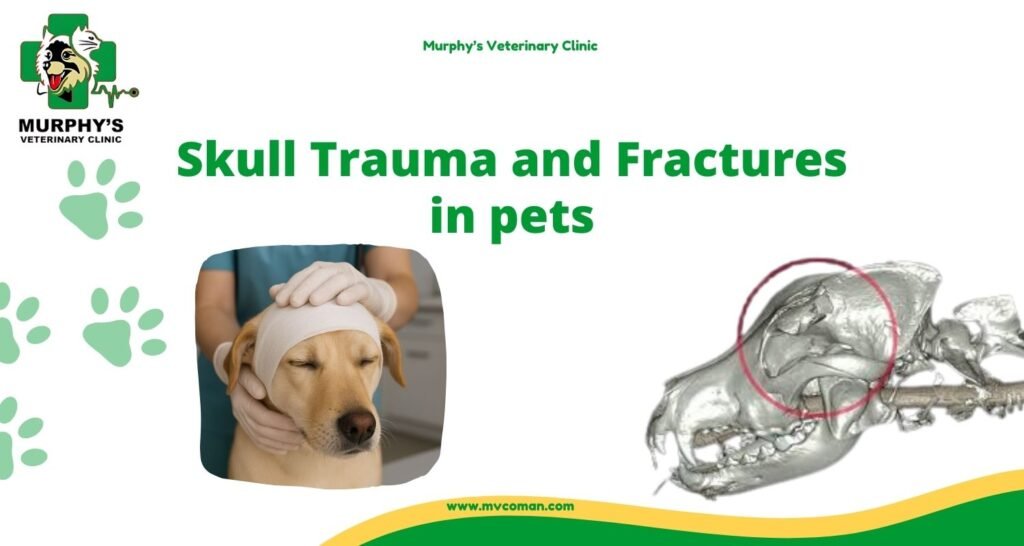
Accurate diagnosis of Skull Trauma in Pets requires thorough assessment and advanced diagnostic techniques. Initial evaluation includes physical examination, neurological reflex assessment, and vital signs monitoring. Imaging plays a critical role in identifying Skull Trauma in Pets, as internal skull injuries are often invisible externally. Plain radiographs help detect superficial fractures, while CT scans provide detailed visualization of fractures, hemorrhage, or cerebral edema. MRI is particularly useful for evaluating soft tissue and brain parenchyma. Selecting the appropriate diagnostic method depends on the severity of Skull Trauma in Pets and the available veterinary resources.
Table of Diagnostic Methods
| Diagnostic Tool | Primary Use | Accuracy |
| Plain radiography | Detect superficial skull fractures | Moderate |
| CT scan | Detailed fracture and hemorrhage evaluation | Very High |
| MRI | Brain tissue assessment | High |
| Blood tests | General health status | Moderate |
Emergency Treatment and Care
Treatment of Skull Trauma in Pets depends on the injury’s severity, neurological status, and type of fracture. The first priority is to secure the airway, maintain adequate respiration, and prevent shock. Veterinarians may administer anti-inflammatory drugs, anticonvulsants, and medications to control intracranial pressure. Severe cases require hospitalization in an intensive care unit. Prompt intervention in Skull Trauma in Pets reduces the risk of permanent brain injury. Surgery is necessary for depressed or open fractures or when there is significant brain compression. Continuous neurological monitoring and follow-up imaging are essential to track recovery after stabilization.
– Anti-inflammatory medications
– Intracranial pressure management
– Surgical intervention in severe cases
– Intensive care support
– Continuous neurological monitoring
Types of Skull Fractures and Their Consequences
Skull Trauma in Pets can result in various types of cranial fractures, each with different clinical implications. Simple fractures generally heal with conservative management, while depressed or open fractures require surgical intervention. Trauma to the cranial base is particularly dangerous because it can damage cranial nerves or major blood vessels. Accurate identification of fracture type is crucial for selecting appropriate treatment. Skull Trauma in Pets may lead to complications such as intracranial hemorrhage, infection, or long-term neurological deficits if not managed properly.
| Fracture Type | Description | Risk Level |
| Simple | Linear crack without displacement | Moderate |
| Depressed | Bone pressed into brain tissue | Very High |
| Open | Associated with skin laceration | High |
| Base of skull | Affects nerves and major vessels | Very High |
Long-term Care and Prevention
Long-term care of Skull Trauma in Pets involves pain management, seizure prevention, physiotherapy, and periodic neurological evaluations. Many animals require weeks of monitoring to prevent secondary complications. Skull Trauma in Pets may cause persistent behavioral changes, necessitating behavioral therapy and medical management. Preventive strategies are essential, including fall prevention, safe transport, and preventing interactions with aggressive animals. Regular veterinary follow-ups allow early detection of complications and adjustment of care plans. Owners should provide a safe environment and adhere to veterinary instructions to optimize recovery. Medication management, physical rehabilitation, and close observation are crucial elements of long-term Skull Trauma in Pets care. Maintaining a structured follow-up schedule ensures early intervention if new symptoms arise. Education on recognizing warning signs enhances outcomes, while prevention strategies reduce the incidence of trauma. Comprehensive long-term management addresses neurological, behavioral, and musculoskeletal aspects of recovery, improving quality of life.
Conclusion
Skull Trauma in Pets is a critical veterinary emergency that requires prompt diagnosis and proper management to optimize outcomes. Traumatic injuries to the skull may initially present with subtle signs, emphasizing the need for careful observation and early veterinary intervention. Advanced imaging techniques are essential for accurate assessment of fractures, hemorrhage, or brain edema. Timely treatment of Skull Trauma in Pets significantly increases the likelihood of full recovery. Long-term care, including monitoring, rehabilitation, and behavioral support, helps prevent secondary complications. Owner awareness of early signs and emergency responses can save lives. Preventive measures, such as safe handling and environmental modifications, reduce the risk of trauma. Collaborative care with a veterinary team is key to managing these injuries successfully. Overall, Skull Trauma in Pets requires comprehensive attention to ensure the health and well-being of affected animals.
Murphy’s Veterinary Clinic offers advanced imaging tools such as CT and MRI, a fully equipped emergency department, specialized neurology services, and intensive care facilities. The clinic provides accurate neurological evaluations, surgical management of cranial fractures, intensive monitoring, rehabilitation, and long-term follow-up. These services ensure that animals suffering from Skull Trauma in Pets receive optimal care for the best possible recovery outcomes.
