
Diseases & Treatments, Emergency & First Aid, Veterinary Science & Advances
Traumatic Pet Joint Dislocation After Injuries in Pets
Apr
Topics covered in this article:
- Common Causes of Traumatic Pet Joint Dislocation
- Clinical Symptoms and Diagnostic Parameters of Traumatic Pet Joint Dislocation
- Management and Treatment Methods for Traumatic Pet Joint Dislocation
- Rehabilitation and Post-Surgical Care
- Preventing Secondary Complications
- Conclusion
Traumatic Pet Joint Dislocation is a critical orthopedic emergency in veterinary medicine that requires immediate clinical intervention to prevent permanent disability. This condition occurs when a strong external force causes the joint to move out of its normal position, often leading to severe damage to surrounding tissues such as ligaments and the joint capsule. This type of injury causes intense pain and stress and may lead to systemic complications if not treated quickly. Timely reduction is essential, as delays can result in muscle contraction and make non-surgical correction difficult. In addition, disrupted blood supply may cause tissue damage if pressure is not relieved. Understanding joint dislocation injuries in pets helps owners recognize serious conditions early and seek urgent treatment to ensure proper recovery and joint stability.
Common Causes of Traumatic Pet Joint Dislocation
Traumatic Pet Joint Dislocation is rarely spontaneous and is almost always the result of high-energy mechanical impact that overrides the structural integrity of the musculoskeletal system. The most frequent cause of Traumatic Pet Joint Dislocation is motor vehicle accidents, where lateral shearing forces act directly upon the hip or elbow joints during the collision. Another significant contributor to Traumatic Pet Joint Dislocation is feline high-rise syndrome, involving accidental falls from balconies which place immense vertical pressure on the carpal joints. In all these scenarios, the primary stabilization tissues fail under tension, leading to a complete loss of joint congruity and immediate loss of function.
- High-velocity vehicular collisions
- Accidental falls from balconies
- Inter-animal fighting and trauma
- Severe rotational torque during play
Clinical Symptoms and Diagnostic Parameters of Traumatic Pet Joint Dislocation
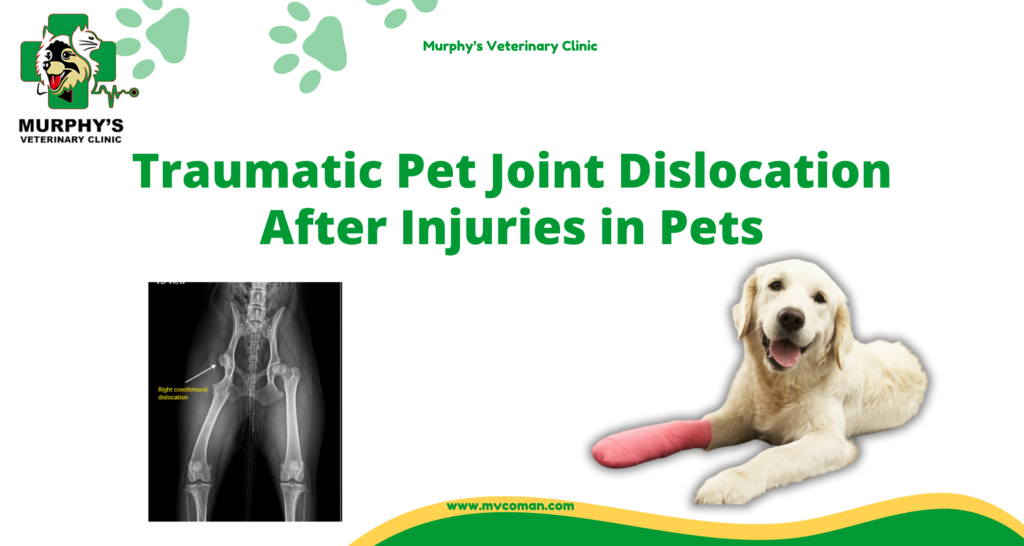
Diagnosing Traumatic Pet Joint Dislocation requires a sophisticated combination of physical manipulation and advanced diagnostic imaging to assess the full extent of the skeletal displacement. When a patient is presented with a suspected Traumatic Pet Joint Dislocation, the veterinarian first evaluates the limb for non-weight bearing lameness and gross anatomical deformity. Digital radiography remains the gold standard for confirming Traumatic Pet Joint Dislocation, allowing the surgeon to visualize whether the luxation is simple or complicated by periarticular fractures. Early and precise identification is the only way to ensure that the subsequent reduction procedure is successful and that the joint remains stable.
| Assessment Parameter | Clinical Manifestation | Diagnostic Method |
| Anatomical Alignment | Gross deformity and limb shortening | Physical Palpation |
| Mechanical Function | Crepitus and loss of motion | Orthopedic Stress Tests |
| Soft Tissue Health | Severe periarticular edema | Musculoskeletal Ultrasound |
| Bony Integrity | Complete loss of joint congruity | Orthogonal Radiography |
| Neural Response | Proprioceptive deficits | Neurological Assessment |
Management and Treatment Methods for Traumatic Pet Joint Dislocation
The clinical strategy for treating Traumatic Pet Joint Dislocation is determined by the severity of the displacement and the inherent stability of the joint after it has been repositioned. In many acute cases, a closed reduction can be performed under deep general anesthesia, where the surgeon manually guides the bone back into its socket. However, if the injury is associated with significant ligamentous rupture or remains unstable, open surgical intervention becomes mandatory. During surgery, the surgeon may use prosthetic sutures or bone anchors to replicate the function of the torn ligaments and provide internal support for the limb.
- Closed reduction under anesthesia
- Prosthetic ligament reconstruction
- Joint capsule imbrication
- Internal fixation with bone anchors
- Application of support slings
Rehabilitation and Post-Surgical Care
The success of a recovery from Traumatic Pet Joint Dislocation is heavily reliant on a strictly managed post-operative protocol that balances immobilization with gradual mobilization. After the initial treatment, the patient must undergo a period of strict crate rest, often lasting four to six weeks, to allow the delicate joint capsule to strengthen. As the initial inflammatory phase subsides, controlled physical therapy, such as passive range of motion exercises and underwater treadmill sessions, is introduced to prevent muscle atrophy. Owners must be vigilant in preventing any jumping, as the reconstructed tissues are highly susceptible to re-injury during the healing process.
| Recovery Stage | Timeframe | Key Care Interventions |
| Acute Rest Phase | 1-4 Weeks | Strict crate confinement |
| Mobile Recovery | 4-8 Weeks | Controlled leash-only walks |
| Strength Building | 8-12 Weeks | Hydrotherapy and PT |
| Long-term Support | Permanent | Chondroprotective supplements |
Preventing Secondary Complications
Preventing long-term morbidity following Traumatic Pet Joint Dislocation is an ongoing process that requires diligent monitoring of the animal’s joint health and overall body condition. The most significant complication is the onset of degenerative joint disease, caused by the initial trauma to the articular cartilage surfaces. To mitigate this, maintaining an ideal body weight is crucial, as excess weight places undue mechanical stress on a previously compromised joint. Additionally, long-term administration of omega-3 fatty acids and glucosamine can help preserve the remaining cartilage and reduce the chronic inflammation typically seen after such injuries.
- Strategic weight management
- Long-term chondroprotection
- Low-impact exercise routines
- Routine orthopedic monitoring
- Environmental safety adjustments
Conclusion
In summary, a serious joint injury is a profound trauma that demands a rapid, expert medical response to ensure a successful outcome for the affected animal. From the initial moment of impact to the final stages of physical rehabilitation, managing these orthopedic cases requires a dedicated partnership between the veterinary team and the pet owner. While the injury is undoubtedly severe, modern advances in surgery and regenerative medicine have made it possible for pets to return to an active lifestyle. Early diagnosis remains the most critical factor, as it prevents the complications of chronic displacement and severe soft tissue fibrosis. By following a structured recovery plan, we can effectively overcome the challenges of joint instability and protect our pets’ mobility.
At Murphy’s Veterinary Clinic, we specialize in the emergency management of complex orthopedic injuries using the latest in surgical technology and post-operative care. Our dedicated orthopedic surgeons at Murphy’s Veterinary Clinic are available 24/7 to handle severe luxations, providing your pet with the best possible chance at a full recovery. If your companion has suffered a traumatic injury, trust the experts at Murphy’s Veterinary Clinic to provide the compassionate and specialized care they deserve.
