
Diseases & Treatments, Health & General Care, Veterinary Science & Advances
Ligament Tears in Animals as Orthopedic Trauma
Apr
Topics covered in this article:
- Ligament Tears in Animals and Precise Orthopedic Diagnosis
- Advanced Surgical Techniques for Treating Ligament Tears in Animals
- Rehabilitation and Recovery After Ligament Tears in Animals
- Preventive Care and Weight Management in Ligament Tears in Animals
- The Role of Supportive Supplements
- Conclusion
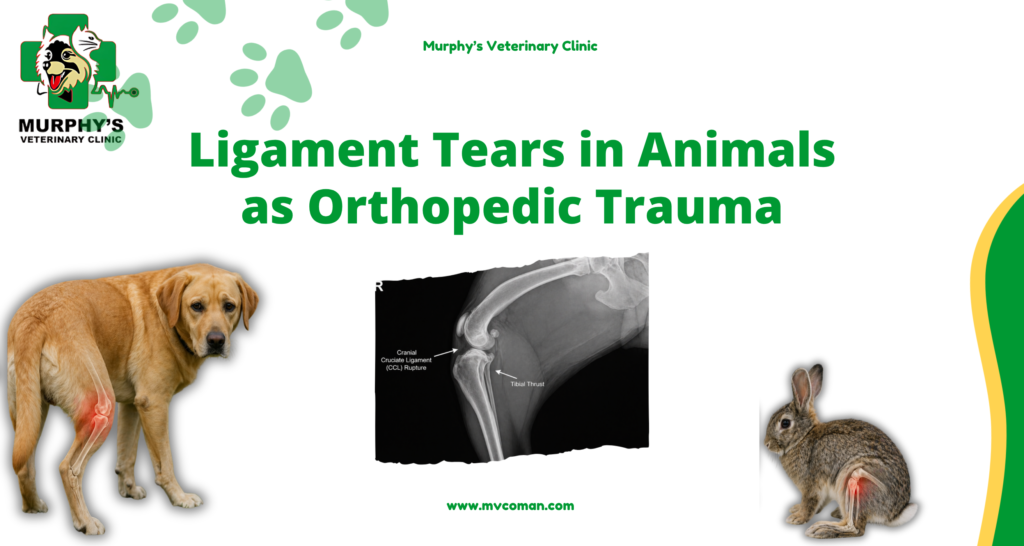
Ligament Tears in Animals represent one of the most challenging orthopedic injuries in modern veterinary medicine, primarily affecting active and high-energy canine breeds. This condition, often resulting from direct trauma or progressive degeneration, can cause sudden, severe lameness and significantly decrease a pet’s quality of life. These injuries, particularly involving the Cranial Cruciate Ligament (CCL), require prompt intervention to prevent the onset of premature osteoarthritis. In many instances, surgical intervention is the only viable path to restoring normal function; however, post-operative management is just as critical as the procedure itself. Understanding the injury mechanism and diagnostic modalities empowers pet owners to make informed decisions. Such joint injuries can occur due to sudden twisting motions or improper jumping, leading to intense inflammation within the stifle joint. Clinical teams believe that early identification of symptoms drastically increases the success rate of surgical stabilization. This article explores the diagnostic dimensions, advanced surgical techniques, and rehabilitative care necessary to provide a comprehensive guide for managing these conditions.
Ligament Tears in Animals and Precise Orthopedic Diagnosis
The recovery period following surgery for Ligament Tears in Animals is crucial for restoring muscle strength and joint mobility. Specialized physiotherapy, including controlled exercises and hydrotherapy, can speed up healing. In the early weeks after treatment, strict restriction of jumping and high-impact activity is essential. Cold laser therapy can also help reduce pain and inflammation. Techniques such as therapeutic massage and Passive Range of Motion (PROM) exercises are effective in preventing muscle loss. A gradual and supervised rehabilitation plan is necessary to ensure proper recovery without overloading the joint.
- Physical examination and Cranial Drawer Test
- Digital radiography for joint change assessment
- Arthroscopy for direct lesion visualization
- Magnetic Resonance Imaging (MRI) for soft tissue evaluation
Advanced Surgical Techniques for Treating Ligament Tears in Animals
The choice of surgical technique for treating Ligament Tears in Animals depends on the animal’s weight, age, and activity level. “Biomechanical altering” surgeries, such as TPLO, are currently recognized as the gold standard. In these methods, rather than replacing the ligament, the bone structure is modified to eliminate the need for the cruciate ligament. Ligament Tears in Animals in large breeds typically respond better to these specialized procedures. The surgeon must precisely measure the joint geometry to ensure total stability. Failure to perform timely surgery in cases of Ligament Tears in Animals leads to the formation of osteophytes and permanent lameness.
| Surgical Technique | Primary Objective | Suitable For |
| TPLO Procedure | Tibial Plateau Leveling | Heavy and active dogs |
| TTA Procedure | Tibial Tuberosity Advancement | Animals with specific joint angles |
| Extracapsular Technique | Lateral Suture Stabilization | Small dogs and cats |
| Arthroscopy | Debridement of ligament remnants | All cases prior to stabilization |
Rehabilitation and Recovery After Ligament Tears in Animals
The recovery period following surgery for Ligament Tears in Animals is crucial for restoring muscle strength and joint mobility. Specialized physiotherapy, including controlled exercises and hydrotherapy, can speed up healing. In the early weeks after treatment, strict restriction of jumping and high-impact activity is essential. Cold laser therapy can also help reduce pain and inflammation. Techniques such as therapeutic massage and Passive Range of Motion (PROM) exercises are effective in preventing muscle loss. A gradual and supervised rehabilitation plan is necessary to ensure proper recovery without overloading the joint.
- Hydrotherapy and underwater treadmill sessions
- Laser therapy to accelerate tissue repair
- Passive Range of Motion (PROM) exercises
- Short, controlled leash walks
Preventive Care and Weight Management in Ligament Tears in Animals
One of the primary factors for recurrence or the occurrence of Ligament Tears in Animals in the contralateral limb is excess weight, which places immense mechanical stress on the joints. A diet rich in glucosamine and Omega-3 fatty acids is recommended to maintain cartilage health after experiencing Ligament Tears in Animals. Weight management must be strictly followed to prevent unnecessary pressure on the operated joint. Regular but controlled-intensity exercise ensures joint stability and reduces the probability of a secondary instance of Ligament Tears in Animals.
| Prevention Method | Key Actions | Expected Outcome |
| Caloric Control | Reduction of body mass | Decreased joint load |
| Joint Supplements | Chondroitin intake | Strengthening of articular cartilage |
| Gentle Exercise | Walking on soft surfaces | Maintenance of muscle mass |
| Periodic Check-ups | Annual veterinary exams | Early detection of weaknesses |
The Role of Supportive Supplements
Utilizing modern supplements alongside surgical treatments for Ligament Tears in Animals can significantly improve a pet’s quality of life. These supplements help reduce oxidative stress and slow joint degeneration. In many cases, chondroprotective agents are introduced early in the treatment process. Non-steroidal anti-inflammatory drugs (NSAIDs) also play an important role in controlling pain and inflammation. Pet owners should remember that medication alone is not enough, and proper home care is essential. Ultimately, the prognosis is very positive when both medical and supportive care protocols are followed correctly.
- Intake of Omega-3 and Omega-6 fatty acids
- Prescription of Non-Steroidal Anti-Inflammatory Drugs (NSAIDs)
- Use of veterinary-specific oral collagen
- Intra-articular injections (e.g., Hyaluronic Acid)
Conclusion
Managing Ligament Tears in Animals is a multi-faceted process requiring close collaboration between the veterinarian, the surgeon, and the pet owner. From the moment of diagnosis to the end of the rehabilitation period, the primary goal is to reduce pain and restore stable mobility to the pet. Although Ligament Tears in Animals are considered serious injuries, with modern surgical techniques like TPLO, most animals can return to their normal lives. It should not be forgotten that prevention through proper weight control and structured exercise is the best way to avoid Ligament Tears in Animals. Post-operative care and regular physiotherapy play a key role in long-term recovery success. Ignoring early signs of lameness can lead to serious joint damage and chronic issues. Therefore, quick attention to any changes in movement is essential. With a careful and scientific approach, most pets can return to normal activity levels, and ongoing advancements continue to improve treatment outcomes.
Murphy’s Veterinary Clinic, utilizing specialized orthopedic surgeons and advanced imaging equipment, is ready to provide diagnostic and therapeutic services regarding Ligament Tears in Animals. At this center, we work with you by developing dedicated rehabilitation programs and modern physiotherapy to ensure your beloved pet returns to daily activities with minimal pain and maximum speed after surgery. Specialized consultation on weight management and preventive diets are among our other services to prevent re-injury.
